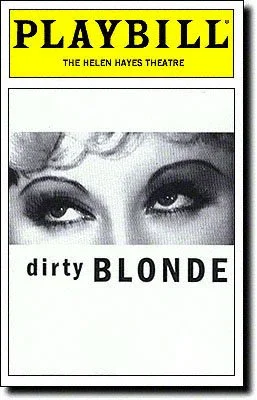
Dirty Blonde
Written by Claudia Shear
Conceived by Claudia Shear & James Lapine
Original song “Dirty Blonde” by Bob Stillman
Directed by James Lapine
Dirty Blonde, a comedy with music, explores the legendary Mae West, one of America's most enduring and controversial pop culture icons. The play, which draws its title from the West film quip "I made myself platinum, but I was born a dirty blonde,” tells the story of two lonely and obsessive West fans who meet at her grave and form a unique relationship as they bond over the woman they worship. This is played out against a re-enactment of the sometimes equally strange turns of West’s showbiz career.
Dirty Blonde
The Helen Hayes Theater
May 1, 2000 - March 4, 2001
Ran for 352 Performances
The play premiered Off-Broadway at the New York Theatre Workshop on January 10, 2000, running until February 13, 2000
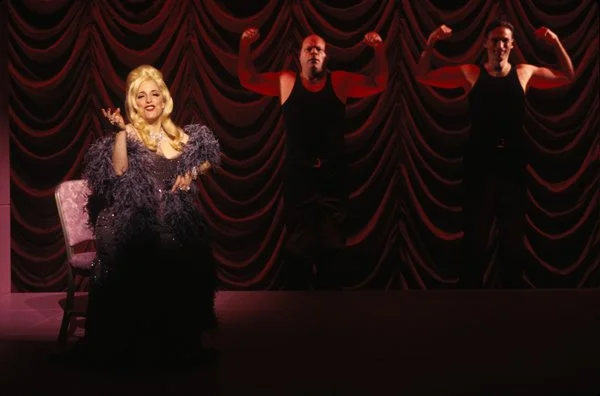
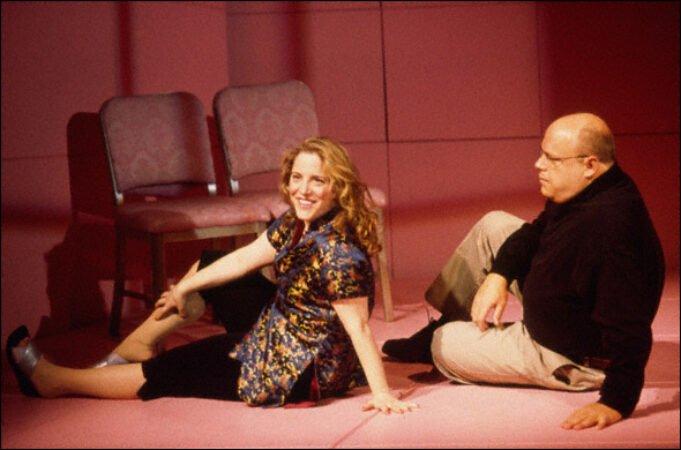
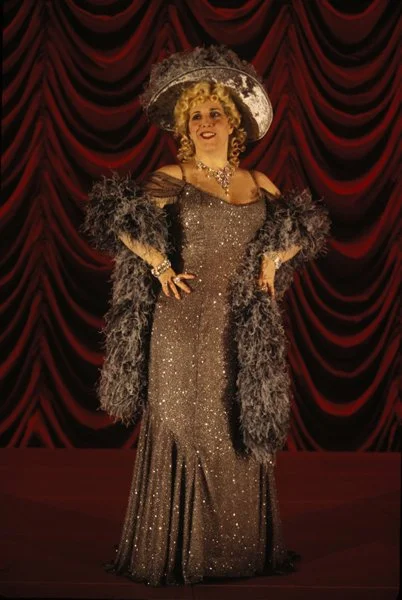
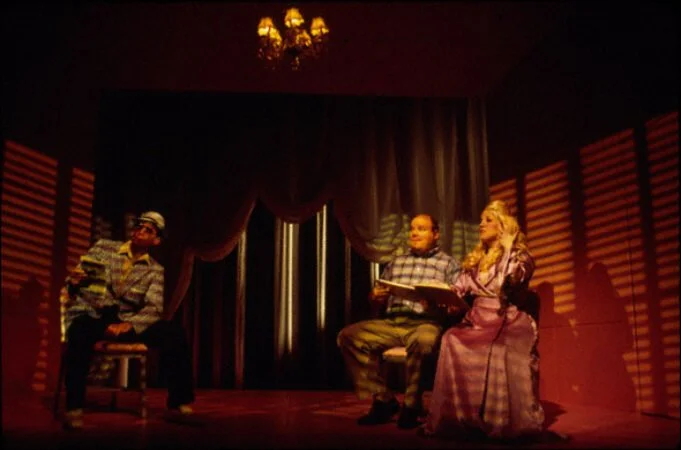
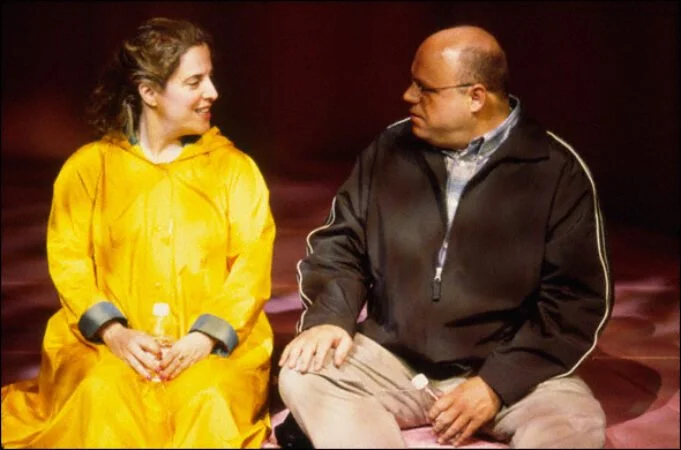
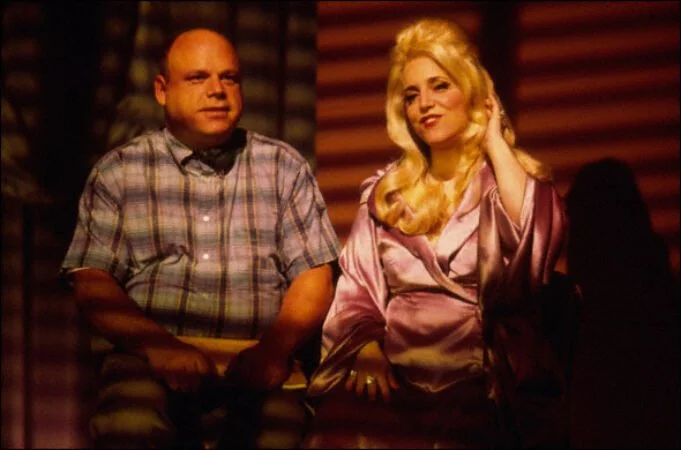
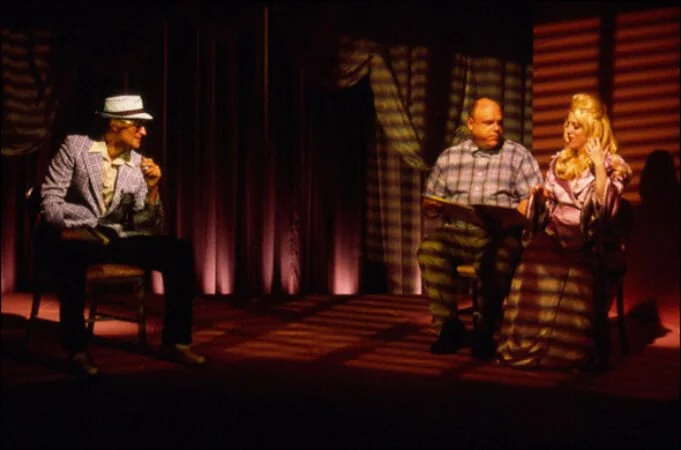
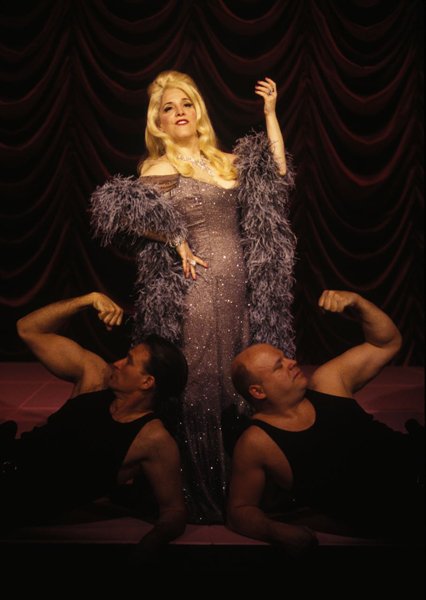
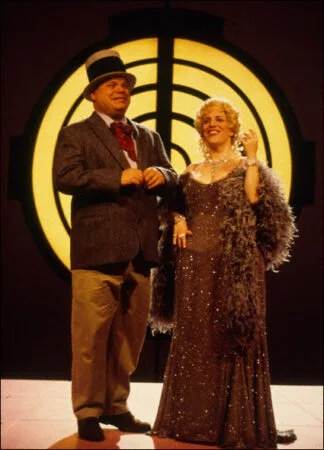
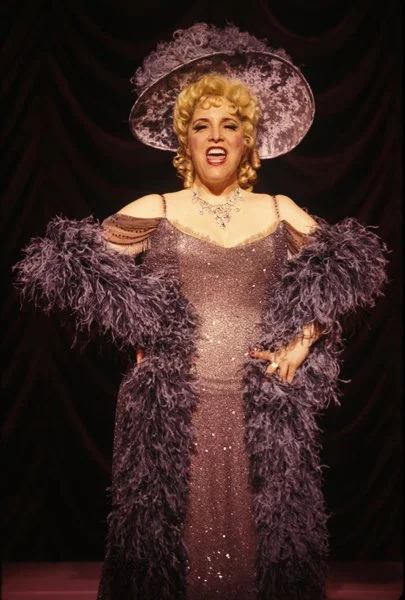
Photos by Joan Marcus
-
Written by Claudia Shear
Conceived by Claudia Shear and James Lapine
Directed by James Lapine
Theatre Owned / Operated by Martin Markinson and Donald Tick
Produced by The Shubert Organization (Gerald Schoenfeld: Chairman; Philip J. Smith: President; Robert E. Wankel: Executive Vice President), Chase Mishkin, OSTAR Enterprises and ABC, Inc.; Produced in association with New York Theatre Workshop
Music arranged by Bob Stillman
Musical Director: Bob Stillman
Original song "Dirty Blonde" by Bob Stillman
Featuring songs by Garret Frerichs and Oezlem Cetin
Featuring songs with lyrics by Ben Ellison and Gladys Dubois
Musical staging by John Carrafa
Associate Director: Gareth Hendee
Assistant Choreographer: Rachel Bress
Scenic Design by Douglas Stein
Costume Design by Susan Hilferty
Lighting Design by David J. Lander
Sound Design by Dan Moses Schreier
Wig Design by Tom Watson
Assistant Scenic Design: Antje Ellermann
Assistant Costume Design: Linda Ross
Assistant Lighting Design: Brenda Dolan
Assistant Sound Design: Catherine D. Mardis
General Manager: Albert Poland
Company Manager: Bruce Klinger
Production Stage Manager: Leila Knox
Technical Supervisor: Gene O'Donovan
Additional casting by Ilene Starger
Press Representative: Richard Kornberg and Don Summa
Vocal Coach: Deborah Hecht
Shubert Organization Creative Projects Director
D.S. Moynihan; Advertising: SPOTCo, Inc.
Mae West material courtesy of the Estate of Mae West by the Roger Richman Agency
-
Kevin Chamberlin: Charlie and others
Claudia Shear: Jo, Mae
Bob Stillman: Frank Wallace, Ed Hearn, and others
Understudies: Paul Amodeo (Frank Wallace, Ed Hearn, and others), Kevin Carolan (Charlie and others), Nora Mae Lyng (Jo, Mae)
Kathy Najimy replaced Shear on January 9, 2001. Tom Riis Farrell replaced Chamberlin on July 6, 2000.
Awards, Reviews & Features
2000 Tony Awards
Nominated for Best Play, Best Direction of a Play
and Nominated for Best Actress in a Play (Shear) & Best Featured Actor in a Play (Stillman & Chamberlin)
2000 Drama Desk Awards
Nominated for Outstanding Play & three other awards
“[Shear & Lapine] conceived the show together, and Lapine’s light-handed, fleet-of-foot direction perfectly complements Shear’s snappy script. ‘Dirty Blonde’ never digs deep, but it covers a lot of colorful territory in its brief running time.”
FUN FACT:
Dirty Blonde is one of few plays in Broadway history to have had its entire cast nominated for Tony Awards.
“Shaped with remarkable fluidity and inventiveness, 'Dirty Blonde' presents one of the canniest portraits on record of that floating dialogue between icons and idolizers that remains so much a part of American culture. What's more, it does so without the usual tut-tutting, instead making a persuasive case for star worship as a healthy religion…Conceived by Ms. Shear and the show's director, James Lapine, who does his best work in years here… the moment is one that could be achieved only in the theater, and while 'Dirty Blonde' may celebrate a movie star, it also celebrates theater.”