The Moment When
Written by James Lapine
Directed by Michael Lindsay-Hogg
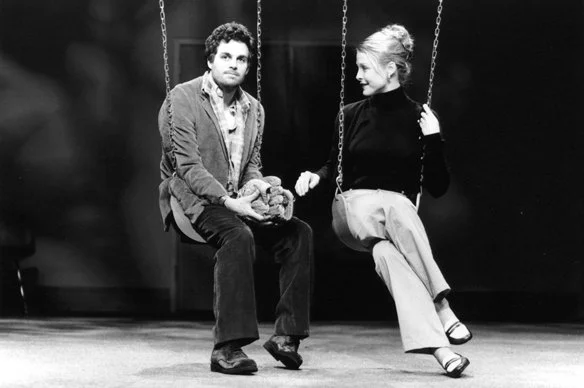
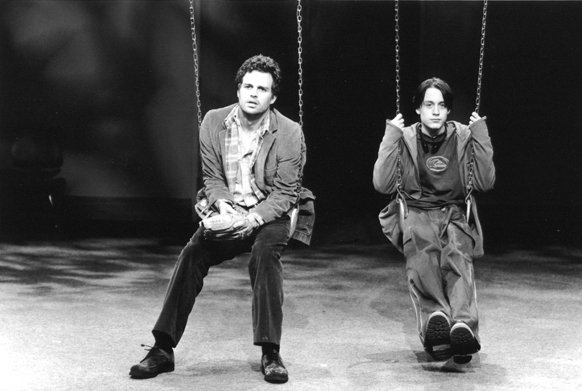
The Moment When follows five people as their lives intertwine and separate. Steven, an artist, meets the writer Alice at a fashionable New York party hosted by Paula, a legendary literary agent. Paula’s young assistant, Dana, introduces herself to Alice and Steven, and the courses of the next fifteen years of their lives are set in motion. The play marks those moments in our lives that may pass unnoticed but determine who we become. The Moment When, while tracking the successes and failures of career, marriage, parenthood and friendship, also charts the life of Dana and Steven’s son, Charley, who begins his own trajectory towards fulfillment and loss.
The Moment When
Playwrights Horizons
March 21, 1999 - March 26, 1999
-
James Lapine, Playwright
Michael Lindsay-Hogg, Director
Playwrights Horizons, Producer
Tim Sanford, Artistic Director
Leslie Marcus, Managing Director
David Van Tieghem, Music
J. Allen Suddeth, Fight Director
Eugene Lee, Set Designer
Ann Roth, Costume Designer
Yael Lubetzky, Lighting Designer
David Van Tieghem, Sound Designer
Lynn Landis, General Manager
Renee Lutz, Production Stage Manager
Tammy Scozzafava, Assistant Stage Manager
James Calleri, Other -
Arija Bareikis: Dana
Kieran Culkin: Wilson
Illeana Douglas: Alice
Ann Harada: Nurse/Waitress
Phyllis Newman: Paula
Mark Ruffalo: Steven
“‘Clearly, I don't know how things work. I'm just wandering in the dark here,’ says a worried mother in the final moments of James Lapine's rich, prismatic new play The Moment When, making its world premiere in a cruelly brief run at Playwrights Horizons. This extraordinarily ambitious piece of writing dares to take the audience to similarly murky places, without bothering to put up the usual signposts or even making the expected dramatic explanations. It begins as a brittle romantic comedy about young New Yorkers apparently negotiating a one-night stand, but ends some two and a half-hours later wandering into far darker territory, even gently tiptoeing toward tragedy.”
Reviews & Features